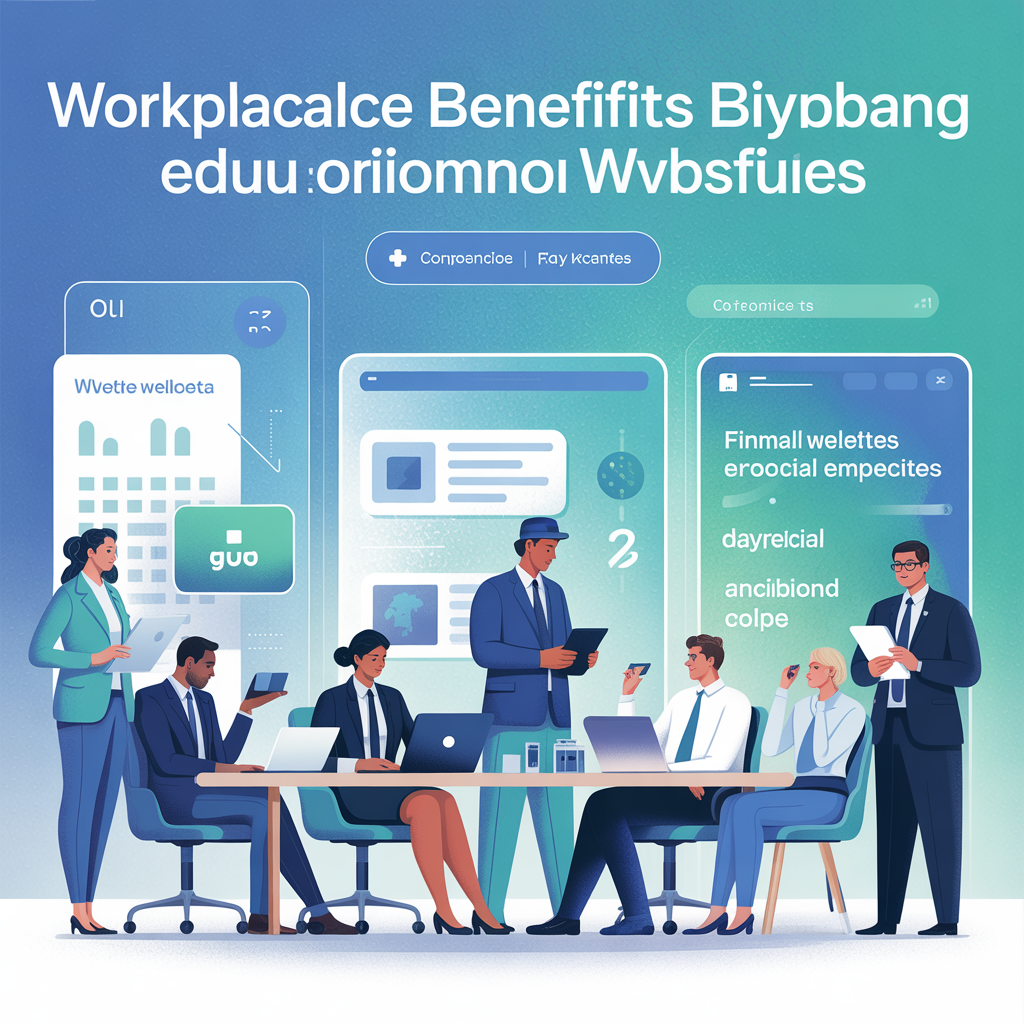
How Employee Benefits Communication Systems Are Structured in Large Organizations
This article is provided strictly for general educational and informational purposes. It does not promote, sell, recommend, or provide financial, insurance, legal, payroll, tax, employment, or investment services. References to workplace benefit systems, providers, or administrative processes are presented solely in an informational context intended to support general understanding of employee benefit structures and terminology.
Introduction
Employee benefits communication in large organizations has become a structured discipline involving multiple layers of documentation, digital platforms, and standardized messaging frameworks. As organizations scale, the complexity of communicating workplace-related information increases significantly, requiring consistent terminology and centralized information systems.
In many educational discussions of workplace benefit ecosystems, references such as colonial life or coloniallife are used as contextual examples when describing how benefit information is organized, categorized, and distributed within enterprise environments. These references typically appear in informational analyses rather than product-oriented contexts.
This article explores how benefit communication systems are structured, how information flows within organizations, and how employees interact with standardized workplace documentation.
The Architecture of Benefits Communication Systems
Large organizations typically rely on multi-layered communication systems designed to ensure consistency and accessibility of workplace information. These systems are not limited to a single platform but instead function as interconnected environments.
Centralized Information Repositories
At the core of most communication systems is a centralized repository that stores workplace documentation. These repositories may include policy descriptions, procedural guides, glossary references, and administrative timelines.
The purpose of these systems is to:
- Standardize terminology across departments
- Reduce informational inconsistencies
- Maintain version-controlled documentation
- Provide structured access to workplace materials
Within educational content referencing coloniallife, these repositories are often described as foundational components of benefit communication infrastructure.
Layered Distribution Channels
Information is rarely delivered through a single channel. Instead, organizations use layered distribution models that may include internal portals, email notifications, printed materials, and onboarding platforms.
Each layer serves a specific purpose:
- Digital portals provide real-time access
- Email systems deliver time-sensitive updates
- Printed materials support onboarding or offline access
- HR dashboards manage administrative tracking
This layered structure ensures redundancy and accessibility across different employee environments.
Role of Standardized Terminology in Workplace Systems
One of the most important components of benefit communication is terminology standardization. Without consistent language, employees may encounter conflicting interpretations of workplace documentation.
Organizations typically develop internal glossaries that define key terms related to eligibility, documentation processes, and administrative workflows.
These glossaries:
- Reduce ambiguity in communication
- Improve onboarding efficiency
- Support multilingual translation systems
- Maintain consistency across departments
In educational references involving colonial life systems, terminology standardization is often highlighted as a key factor in improving organizational clarity.
Digital Transformation of Benefit Communication
The transition from paper-based documentation to digital systems has significantly changed how workplace information is structured and accessed.
Employee Portals and Self-Service Systems
Modern employee portals serve as centralized access points for workplace information. These systems allow employees to navigate structured categories of documentation without requiring direct HR intervention for every inquiry.
Common features include:
- Searchable knowledge bases
- Document libraries
- Policy version tracking
- Automated notifications
- Structured FAQ sections
These systems are designed primarily for informational efficiency rather than transactional processing.
Mobile Accessibility and Distributed Workforces
As remote and hybrid work environments expand, mobile access to workplace documentation has become increasingly important. Organizations must ensure that benefit communication systems remain functional across different devices and locations.
Mobile-friendly systems typically emphasize:
- Simplified navigation structures
- Responsive document formatting
- Secure authentication layers
- Reduced interface complexity
References to coloniallife in educational contexts often highlight how digital accessibility improves consistency across distributed employee groups.
Information Flow Within HR Ecosystems
Human resource departments play a central role in managing the flow of workplace information. This involves coordinating between policy creators, documentation teams, and employees.
Document Lifecycle Management
Workplace documentation typically follows a structured lifecycle:
- Draft creation
- Internal review
- Compliance validation
- Publication
- Periodic updates
- Archival or replacement
Each stage ensures that information remains accurate and aligned with organizational standards.
Internal Communication Alignment
HR teams also ensure that messaging across different channels remains aligned. This includes synchronizing digital portals, onboarding materials, and internal announcements.
Misalignment between channels can lead to confusion, making coordination a critical component of communication design.
Common Challenges in Benefit Information Systems
Despite advancements in digital infrastructure, organizations continue to face challenges in maintaining effective communication systems.
Information Overload
Employees may encounter large volumes of documentation, making it difficult to identify relevant information quickly. This often leads to the need for improved search functionality and better content categorization.
Terminology Complexity
Complex administrative language can create barriers to understanding. Organizations often address this by simplifying definitions and creating layered explanations for different knowledge levels.
System Fragmentation
In some cases, workplace information is distributed across multiple platforms that are not fully integrated. This fragmentation can reduce efficiency and increase confusion if not properly managed.
Educational Context of Colonial Life References
In educational discussions about workplace benefit systems, colonial life and coloniallife are sometimes used as reference points to illustrate how structured benefit communication frameworks operate in practice.
These references are generally used to:
- Explain system architecture concepts
- Demonstrate documentation workflows
- Illustrate employee communication structures
- Provide contextual examples in HR education materials
It is important to note that such references are typically used in a descriptive and informational manner rather than as endorsements or operational guidance.
Evolving Standards in Workplace Communication
Modern workplace communication systems continue to evolve toward greater clarity, accessibility, and consistency. Organizations are increasingly adopting structured content strategies similar to those used in digital publishing and knowledge management systems.
Key developments include:
- Modular documentation design
- AI-assisted content navigation
- Standardized metadata tagging
- Multilingual support frameworks
- Improved accessibility compliance
These improvements aim to ensure that employees can access relevant information efficiently regardless of role or location.
Conclusion
Employee benefits communication systems in large organizations are complex infrastructures designed to manage, structure, and distribute workplace information consistently. Through centralized repositories, standardized terminology, and layered communication channels, organizations aim to maintain clarity and accessibility across diverse employee environments.
Educational references to colonial life or coloniallife typically serve as illustrative examples within broader discussions of workplace communication systems and information architecture. As digital transformation continues, these systems are expected to become increasingly structured, accessible, and integrated.
This article is provided strictly for general educational and informational purposes. It does not promote, sell, recommend, or provide financial, insurance, legal, payroll, tax, employment, or investment services. References to workplace benefit systems, providers, or administrative processes are presented solely in an informational context intended to support general understanding of employee benefit structures and terminology.


You May Also Like
Employee Benefit Education Systems and Workplace Learning Infrastructure in Modern Organizations
Understanding Supplemental Workplace Coverage in Modern Employee Benefit Programs